Schneier: un soggetto (in)credibile per il Movie-Plot Threat Contest

Standard

Dal blog di Bruce Schneier, Announcing: Second Annual Movie-Plot Threat Contest:

The first Movie-Plot Threat Contest asked you to invent a horrific and completely ridiculous, but plausible, terrorist plot […]. This year the contest is a little different. We all know that a good plot to blow up an airplane will cause the banning, or at least screening, of something innocuous. If you stop and think about it, it’s a stupid response. We screened for guns and bombs, so the terrorists used box cutters. We took away box cutters and small knives, so they hid explosives in their shoes. We started screening shoes, so they planned to use liquids. We now confiscate liquids (even though experts agree the plot was implausible)… and they’re going to do something else. We can’t win this game, so why are we playing?

Well, we are playing. And now you can, too. Your goal: invent a terrorist plot to hijack or blow up an airplane with a commonly carried item as a key component. The component should be so critical to the plot that the TSA will have no choice but to ban the item once the plot is uncovered. I want to see a plot horrific and ridiculous, but just plausible enough to take seriously.

Per farlo, c’è tempo fino al 30 aprile prossimo. Da notare che, nonostante il post sia stato pubblicato il primo aprile, Schneier puntualizza che non si tratta di uno scherzo, seppur l’iniziativa sia dettata da un umorismo tanto nero quanto assurdo perché:

terrorism is a real threat, but we’re not any safer through security measures that require us to correctly guess what the terrorists are going to do next.
Venerdì 13 e i sassi che cadono dal cielo

Standard

Venerdì 13Già si era detto circa le infauste storie che nel corso della storia si sono addensate sulla combinazione venerdì 17. Anche il venerdì 13 non è che desti molta più allegria. Ci si mettano poi previsioni come quella che si riferisce a Friday the 13th, 2029:
Friday the 13th is supposed to be an unlucky day, the sort of day you trip on your shoe laces or lose your wallet or get bad news.

But maybe it’s not so bad. Consider this: On April 13th – Friday the 13th – 2029, millions of people are going to go outside, look up and marvel at their good luck. A point of light will be gliding across the sky, faster than many satellites, brighter than most stars.

Un centesimo di cultura

Standard

Un centesimo di cultura è l’estrema summa della lettera aperta scritta da Gianni Laterza a RCS Quotidiani Spa per l’iniziativa Corti di Carta, i libretti allegati al Corriere della Sera due volte a settimana. Gianni ha preso carta e penna chiedendo una specie di “risarcimento simbolico” al colosso editoriale che ha adottato una formula molto simile a quella intrapresa con i Millelire. Lo scopo di questo “risarcimento” è il seguente:

Vogliate destinare un centesimo per ogni copia venduta dei vostri “Corti di Carta” ad un Fondo per la pubblicazione e la diffusione di tutti quei testi editoriali di qualità che non trovano spazio nelle logiche di mercato. Il Fondo deve essere pubblico e trasparente.

Dello stesso argomento scrivono anche Marcello su Riaprire il fuoco e Bernardo sul suo blog.

IPRED2, non dire fantascienza e blog

Standard
  • CopyCrime.eu, Tell the European Parliament to Fix IPRED2

    On April 24th, the European Parliament will vote on IPRED2, the Second Intellectual Property Enforcement Directive. With one stroke, they risk turning thousands of innocent EU citizens and businesses into copycriminals. Only you can stop them. Sign our petition now!

  • Wired, Writers, Directors Fear ‘Sci-Fi’ Label Like an Attack From Mars

    Cormac McCarthy‘s The Road is set during a nuclear winter. Two survivors walk south, breathing toxic air, seeking out the continent’s last canned food while ducking bands of flesh-eaters. Describe it as “post-apocalyptic”, as most critics did, or as a masterpiece of dystopian literature. Just don’t call McCarthy’s novel “science fiction”. Even when clearly appropriate, film studios and publishers avoid the phrase “science fiction”.

  • Wired, The Blogosphere, Where a Tawdry Culture Goes to Die

    Civility is all about self-restraint. It’s not about being told by someone else to say “no,” but finding the inner resolve to say it to yourself. Call it self-discipline. Call it having a little class. Whatever name you give it, it’s almost completely absent from modern society.

  • TOL blogging about Belarus, Online activists help to free political prisoner in Belarus

    The bail amount (15 500 000 Belarusian roubles or 7 300 dollars) — an impossible amount to pay for his family or friends alone — was raised by friends and bloggers who posted an announcement on a number of Belarusian online communities. Cotributions came in 5, 10, 20, dollar amounts, but from a great number of people…

Oltre il terrore: lo spauracchio della propaganda e le vere minacce

Standard

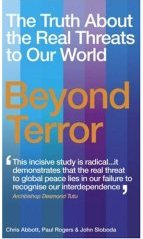
Beyond Terror - The Truth About The Real Threats To Our WorldUna prima versione era uscita nel giugno 2006 sotto forma di saggio, Global Responses to Global Threats: Sustainable Security for the 21st Century. In questi giorni ne è stata pubblicata un’edizione riveduta ed ampliata. È uno studio dell’Oxford Research Group che si intitola Beyond Terror – The Truth About The Real Threats To Our World (qui la scheda del volume edito da Random House):

Is international terrorism really the single greatest threat to world security?

Since the 9/11 attacks, many Western governments assume terrorism to be the greatest threat we face. In response, their dangerous policies attempt to maintain control and keep the status quo by using overwhelming military force. This important book shows why this approach has been such a failure, and how it distracts us from other, much greater, threats:

  • Climate Change Climate change
  • Competition over resources Competition over resources
  • Marginalisation of the majority world Marginalisation of the majority world
  • Global militarisation Global militarisation

Unless urgent, coordinated action is taken in the next 5-10 years on all these issues it will be almost impossible to avoid the earth becoming a highly unstable place by the middle years of this century. Beyond Terror offers an alternative path for politicians, journalists and concerned citizens alike.

Incuriosita dalle novità contenute, l’ho ordinato anche perché gli autori hanno già scritto materiale interessante su temi internazionali. Chris Abbott e John Sloboda hanno pubblicato su OpenDemocracy.org il saggio The “Blair doctrine” and after: five years of humanitarian intervention mentre il terzo autore, Paul Rogers, si è a lungo occupato di Medioriente, Africa e Stati Uniti. Attendo di ricevere il libro.

Una questione semplice e una polemica per “distrarre”

Standard

Journal Evolution between 1927 and 1938Ieri si diceva – anzi lo diceva lo scrittore Jonathan Lethem – che “if you don’t favor wiretapping in the U.S., you must be for the terrorists”. E – traslando un po’ l’asse – oggi si legge dall’Ansa un lancio dal titolo Avvenire critica “terrorismo spray” (il link credo che sarà valido solo per un paio di giorni) in cui si riprendono le parole del direttore del quotidiano cattolico, Paolo Viana. Il quale, in un editoriale dal titolo A preoccupare il brodo di coltura, dice in riferimento alle scritte comparse sui muri di Genova contro il presidente della CEI, monsignor Angelo Bagnasco:

La Chiesa è prepotente, loro sono democratici. È questo lo schema che spesso ricorre nei ragionamenti (parola impegnativa) che vengono mossi da certo estremismo politico […]. Purtroppo, non è la prima volta che si appalesa questo rancore sgrammaticato, e non è la prima volta che il messaggio fortemente etico della Chiesa attizza la reazione di chi sul disorientamento sociale ci campa. Se non di sentimento anti-cattolico, si può parlare certamente di un “fastidio” da parte di taluni milieu culturali e politici; un fastidio che rischia di essere emulato con iniziative criminali.

Il prelato, parlando di unioni civili e accostandole a comportamenti deliquenziali – sarebbe stato “equivocato”, sostiene L’Avvenire. Forse, sarà mica il primo a cui accade? Sta di fatto che, se la condanna alle scritte minatorie è ovviamente condivisibile, i toni di Viana sono del tutto esagerati, tesi a distogliere l’attenzione dal nodo iniziale della questione: la posizione della CEI sulla questione DICO. Scrive ancora infatti: Continue reading

Copyleft, creatività e pubblico dominio secondo Jonathan Lethem

Standard

In una recente intervista dal titolo Writing in the free world, lo scrittore Jonathan Lethem viene incalzato a proposito (anche) di una sua dichiatazione su diritto d’autore e copyleft contenuta nel saggio The ecstasy of influence. Nello specifico si cita:

Appropriation, mimicry, quotation, allusion and sublimated collaboration consist of a kind of sine qua non of the creative act.

E spiega l’autore:

Everything I’ve tried to say, in the Harper’s essay and elsewhere, is that there is an enormous middle ground. It becomes one of those issues like, “If you don’t favor wiretapping in the U.S., you must be for the terrorists.” What I’m seeking to explore is that incredibly fertile middle ground where people control some rights and gain meaningful benefits from those controls, and yet contribute to a healthy public domain and systematically relinquish, or have relinquished for them, meaningless controls on culture that impoverish the public domain.

Ghost Cowboy: la storia del Far West per immagini d’epoca

Standard

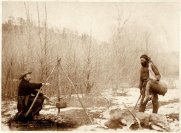
Miners McMillan and Hubbard got their game near Deadwood during the winter of 1887 and 1888 Un blog che ripercorre la storia del Far West attraverso fotografie scattate a cavallo tra il XIX e il XX secolo e che riprende tematiche come la caccia ai nativi, l’impossibile integrazione degli immigrati – in particolare quelli cinesi -, la rincorsa alla nuova frontiera, la lotta ai desperados e la vita negli insediamenti coloniali e minerari che sorgevano man mano che si andavano creando nuovi villaggi:

Ghost cowboy – True tales of Adventure in the American West is about real tales from the 19th-century American frontier, when the Old West was still young. Most of the posts are actual news items from the 1800s and early 1900s.

Libri, musei, tivvù e misteri

Standard
  • LaStampa.it, Libri gratis su Internet: due casi italiani

    Non sempre il gratis su Internet è sinonimo di illegalità. A volte può essere utilizzato come arma di marketing e di promozione o come strumento innovativo per rendere più diretto e immediato il rapporto tra gli autori di un’opera e il pubblico. E’ il caso di La strategia dell’ariete e Monocromatica, due romanzi recentemente distribuiti sia in libreria (a pagamento) che sul Web (gratis).

  • Copyright Renewal Database, Stanford’s Copyright Renewal Database

    In order to make these renewal records more accessible, Stanford has created this searchable database. Building on the work done by Project Gutenberg to transcribe the 1950-1977 renewals, and on early conversion efforts by Michael Lesk, we have converted the published renewal announcements to machine-readable form, and combined them with the renewals for later years made available on the Copyright Office’s website.

  • Wired, The TV Is Dead. Long Live the TV

    Today, once again, TV is evolving into something new and hardly recognizable to generations raised on its earlier incarnations. The structured world of analog over-the-air programming that brought American families together in the living room has been shattered. In its place has emerged a new form of unbounded digital video, endlessly permeable and reprogrammable.

  • Cryptomundo, The Mysterious Monsters

    Bigfoot: living creature, or myth? Join your host Peter Graves, as he attempts to answer that question in The Mysterious Monsters – one of the most fascinating documentaries ever filmed. You’ll hear eyewitness accounts from ordinary people who have encountered the legendary monster… and you’ll see them recall their tales while under hypnosis, or attached to a lie detectors.

  • Neatorama-Mental_Floss Magazine, 10 Strange and Obscure American Museums

    There’s more than one theory about the assassination of John F. Kennedy, so why not have more than one museum devoted to it as well? Most JFK buffs are familiar with the Sixth Floor Museum housed in the former Texas School Book Depository, which recounts all those boring “mainstream” details of the late president’s life leading up to his death at the hands of Lee Harvey Oswald.